
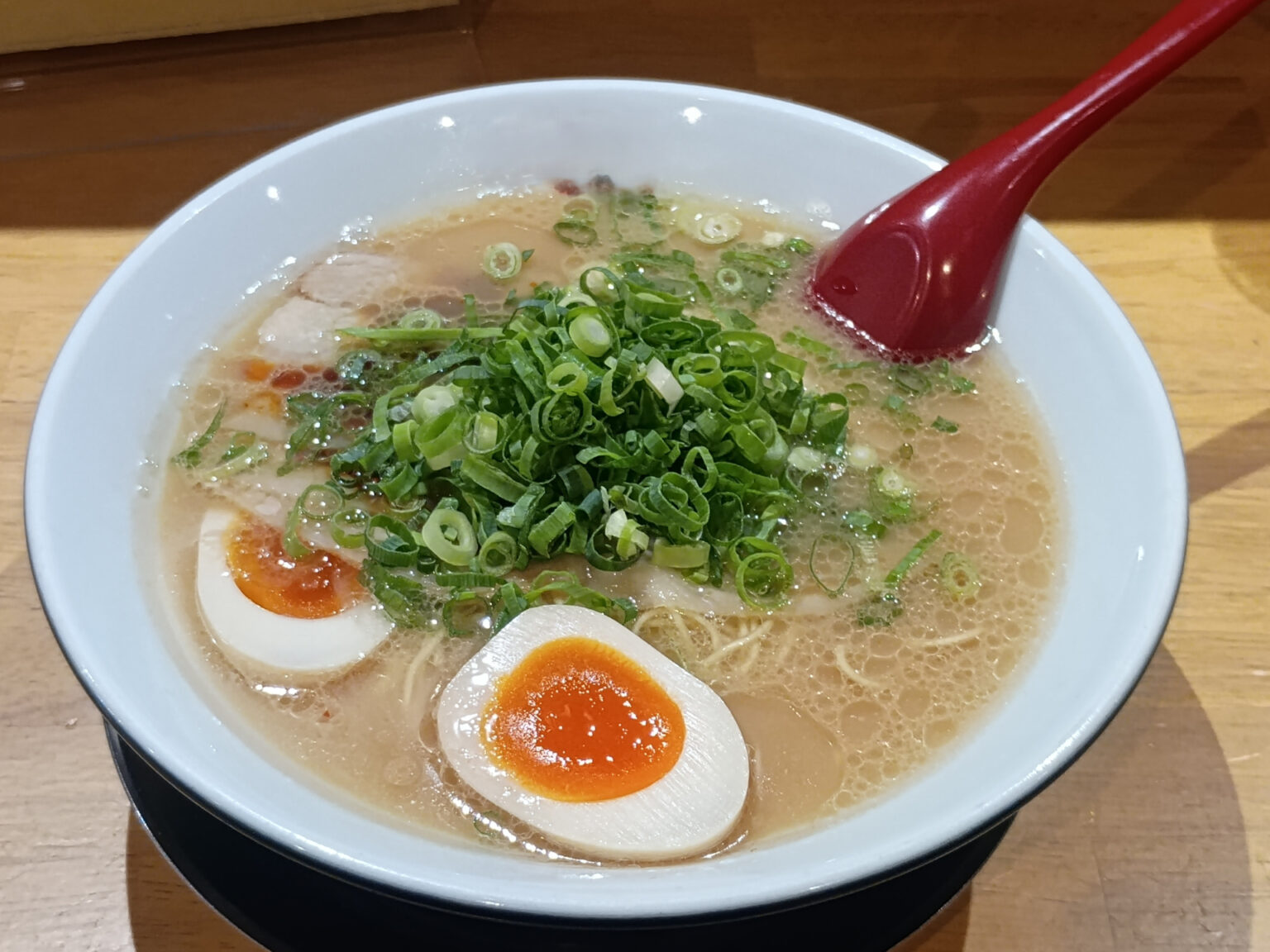
Key points about Hakata ramen at Hakata Port
- Hakata ramen is characterized by its cloudy pork bone broth and thin noodles. It is now a Fukuoka specialty with fans all over the world.
- The custom of ordering extra noodles, known as "kaedama," originated in Nagahama, a town facing Hakata Fishing Port. Nagahama is relatively close to the central pier where passenger ships dock.
- Many restaurants allow you to choose the firmness of your noodles (such as extra firm or firm), so you can enjoy a bowl just the way you like it.
Last verified: September 29, 2026 (Source at the end of this page)
What kind of dish is Hakata ramen?
According to Fukuoka Prefecture's official tourism website, Nagahama ramen originated at "Ganso Nagahama-ya," which opened in 1952. The ramen was made with extremely thin noodles so that it could be served quickly to busy workers at the fish market, and the idea of "kaedama" (extra noodles) instead of a large serving was conceived to prevent the noodles from getting soggy. This kaedama later spread throughout Japan as part of the tonkotsu ramen culture.
Adding ground sesame seeds, garlic, and pickled ginger to change the flavor halfway through is also a Fukuoka style.
If you're going to eat from the port
| Nagahama area | Located around Hakata Fishing Port (Nagahama Fish Market), this area is home to many ramen shops and is considered the birthplace of the "kaedama" (extra noodle serving) tradition. It's about a 10-minute taxi ride from the Central Wharf Cruise Center. |
|---|---|
| Around Tenjin and Hakata Station | It's about a 15-minute bus ride from Chuo Wharf on the Nishitetsu Bus. There are many ramen restaurants, making it an area that's easy to combine with shopping and sightseeing. |
| Food stalls in Nakasu and Tenjin | These are Fukuoka's famous food stalls that operate from evening until night. Perfect for days when the ship is docked late into the night. |
For details on the docking location and access, see "Hakata Port Cruise Port of Call GuidePlease see "".
Store Map
Clicking on a store on the map will allow you to check its opening hours and customer reviews (Google Maps).
Tips for enjoying your port call
- You can order your noodles according to their firmness, such as "very firm," "firm," "regular," or "soft."
- The trick to ordering extra noodles is to leave a little bit of the soup behind.
- The food stalls only open in the evening, so be sure to check the timing with your departure time.
Please tell me what you found delicious.
If you ate Hakata ramen at Hakata Port on your cruise's port call day, please share the name of the restaurant and your impressions using the "Write a Review" link at the bottom of this page. It will be helpful for future visitors. Posts in languages other than Japanese, such as English, are also welcome.
FAQ
Q1What's the difference between Hakata ramen and Nagahama ramen?
Both ramen styles feature thin noodles in a pork bone broth, but Nagahama ramen is characterized by its extremely thin noodles and the style of offering extra noodles (kaedama), which originated in the market. Hakata ramen developed by incorporating the thin noodles and kaedama style of Nagahama ramen.
Q2What is a "kaedama" (a substitute noodle dish)?
This involves ordering extra noodles before you've finished your main course. It was devised in Nagahama as an alternative to a large serving to prevent the noodles from getting soggy.
Source/Reference Information
Last updated: September 29, 2026. Business hours and services are subject to change. Please let us know of any issues through reviews or inquiries.



review
0